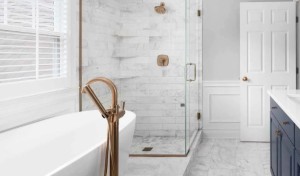
For many years, homeowners, purchasers and property professionals were told that installing a tiled wet-area shower automatically required a building consent.
That is not an accurate statement of the current position.
In an existing dwelling, the replacement of an existing acrylic shower or bath with a tiled shower can often be carried out as exempt building work under Schedule 1 of the Building Act 2004. The important question is not simply whether the new shower is tiled, but whether the entire scope of the renovation falls within the relevant Schedule 1 exemptions. (Building Performance)
Why has there been so much confusion?
Earlier versions of MBIE’s guidance stated that Exemption 12, relating to internal linings and finishes, could not be used for wet-area showers.
However, MBIE Determination 2024/054 examined the installation of two tiled showers in an existing home. The determination concluded that the components of the tiled shower walls—including the substrate, wet-area membrane, tiles, adhesives, fixings and grout—formed part of the dwelling’s internal linings.
Because Exemption 12 applies to building work connected with the internal linings and finishes of the walls, ceilings and floors of an existing dwelling, MBIE concluded that the wet-area membrane and tiled wall installation fell within that exemption. The associated plumbing work was also accepted as falling within Exemption 35. Consequently, no building consent had been required for the shower installations in that particular case. (Building Performance)
Following the determination, MBIE updated its Schedule 1 guidance in October 2025. The document history expressly records that the previous advice saying Exemption 12 could not be used for wet-area showers was removed. That change remains reflected in MBIE’s January 2026 guidance.
Importantly, the October 2025 update did not create a new exemption. It removed guidance that was inconsistent with MBIE’s interpretation of the existing legislation. A tiled shower completed before October 2025 is therefore not automatically unlawful; its status must be assessed against the legislation and the actual scope of work undertaken.
When will a tiled shower commonly be exempt?
A building consent will often not be required where:
- the work is being carried out in an existing dwelling
- an existing shower, bath or other sanitary fixture is being replaced, rather than an additional fixture being created
- the work to the walls and floors falls within Exemption 12 for internal linings and finishes
- the plumbing work falls within Exemption 35
- the total number of sanitary fixtures in the building is not increased
- the work does not modify or affect a specified system
- the plumbing is undertaken by an authorised plumber
- any structural, fire-safety or other work outside the exemptions is not required
- the completed shower complies with the New Zealand Building Code.
Exemption 12 is not limited to replacing materials on a strict like-for-like basis. MBIE’s current guidance confirms that different lining or finishing materials may be used, although appropriate advice should be obtained where linings affect bracing, fire resistance, structural performance or internal-moisture compliance. (Building Performance)
Exemption 35 allows an authorised plumber to alter existing sanitary plumbing without a building consent, provided the total number of sanitary fixtures is not increased and no specified system is affected. MBIE gives the replacement or repositioning of an existing shower, bath, toilet or basin as examples of work that may fall within this exemption. (Building Performance)
When might a building consent still be required?
The exemption does not mean that every bathroom renovation can proceed without consent.
A building consent may still be required where:
- a new ensuite or additional shower is being installed and the number of sanitary fixtures increases
- the work is part of a new dwelling rather than an existing dwelling
- load-bearing framing, floor joists or other structural elements require significant alteration
- plumbing penetrations or alterations could adversely affect structural elements
- work affects a fire separation or another specified system, which can be particularly relevant in apartments and multi-unit buildings
- the work falls outside the wording or conditions of the Schedule 1 exemptions
- the owner elects to obtain a consent so the work can be inspected and receive formal council certification.
Where the position is unclear, the safest approach is to obtain written advice from the local council or a suitably qualified building professional before work begins.
Exempt does not mean unregulated
The most important point is that an exemption removes the need to go through the building consent process. It does not remove the obligation to comply with the Building Code.
Determination 2024/054 illustrates this distinction clearly. MBIE decided that the two tiled showers did not require building consent, but also found that they failed to comply with Building Code Clause E3 Internal Moisture because cracking allowed water to penetrate behind the linings and into concealed building spaces. (Building Performance)
A tiled shower may therefore be legally exempt from consent but still be defective or non-compliant if it has been poorly designed or installed.
Does the work have to be completed by an LBP?
Exemption 12 does not impose a blanket requirement for all shower-related carpentry, tiling or waterproofing work to be completed by a Licensed Building Practitioner.
Building work that validly falls within Schedule 1 is not automatically Restricted Building Work simply because it relates to internal moisture or could cause damage if performed poorly. However, MBIE recommends obtaining suitably qualified advice where internal linings may affect bracing, fire resistance, structural performance or internal-moisture compliance.
Plumbing work covered by Exemption 35 must be completed by an authorised plumber. Electrical work must also be carried out and certified by an appropriately registered electrical worker where required. (Building Performance)
Using an experienced LBP, building surveyor, waterproofing professional or other suitably qualified person remains a sensible risk-management step, particularly where the work will later need to be explained to a purchaser, insurer or lender.
Keep comprehensive records
Because exempt work does not receive council inspections or a Code Compliance Certificate, good documentation is essential.
Homeowners should retain:
- the renovation plans and scope of work
- photographs of the substrate and framing before they are covered
- photographs showing membrane application, junctions and penetrations
- the waterproofing product specifications and installation instructions
- the installer’s declaration, warranty or producer statement, where available
- plumber’s invoices and registration details
- electrical certificates, if applicable
- invoices and details for all contractors
- any inspection report or written assessment from an LBP or building surveyor.
An after-the-fact report can be helpful, but a professional may not be able to verify concealed waterproofing solely by looking at the finished tiles. Photographs and records taken while the work is underway are therefore particularly valuable.
MBIE also recommends that owners consider lodging records of exempt work with their council so the property file reflects what has been completed. Lodging the information does not mean the council has inspected or approved the work, but it may reduce confusion when the property is later sold.
What does this mean when selling a property?
A tiled shower without a building consent should not automatically be described as illegal or unauthorised work.
Where the work properly fell within Schedule 1, it is more accurate to describe it as exempt building work for which a building consent was not required.
Nevertheless, the work should still be disclosed to purchasers, together with the basis on which it was treated as exempt and all available supporting records. Auckland Council has also confirmed in specific correspondence that qualifying replacement bathroom work can fall within Schedule 1, although each project must be assessed according to its own scope and circumstances.
Well-documented exempt work is considerably easier to explain during a sale than a finished shower with no invoices, photographs, product information or contractor records.
The key takeaway
A tiled wet-area shower does not automatically require a building consent.
In an existing dwelling, work involving internal linings, waterproofing membranes and tiled finishes may fall within Exemption 12, while alterations to the existing shower plumbing may fall within Exemption 35.
However, the exemption only applies where all relevant conditions are satisfied. The shower must still comply fully with the Building Code, including Clause E3 Internal Moisture, and the appropriate authorised trades must be used.
Before starting work, homeowners should confirm the exemption position, engage experienced professionals and keep detailed records. Doing so protects the property, provides confidence to future purchasers and greatly reduces the risk of problems when the home is sold.
_________________________________________________________________________
This article provides general information only and is not legal, building or engineering advice. Whether building consent is required depends on the complete scope and circumstances of the proposed work. Homeowners should obtain project-specific advice from their council or a suitably qualified building professional before commencing work.
House Me Legal have an article also addressing this here